


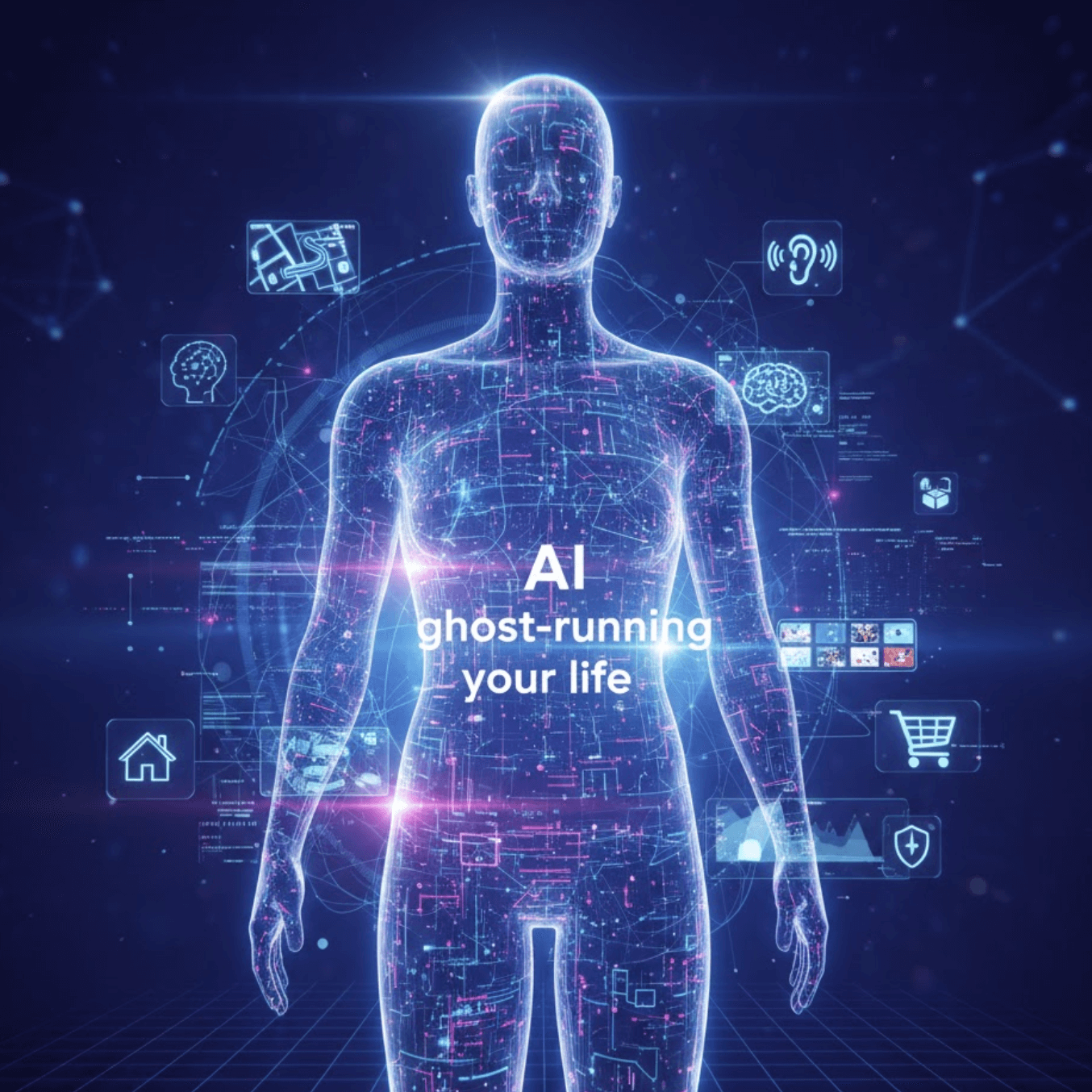
Let’s be real: the “Robot Uprising” isn’t some James Cameron sci-fi flick with chrome skeletons. It’s actually much more subtle—and way more helpful. Whether you’re a hardstack dev or just someone who enjoys a perfectly curated TikTok feed, AI has effectively become the invisible OS of our daily existence.
Here’s how the algorithms are low-key optimizing your life right now.
1. Google Maps: The Pathfinding NPC
Forget “turn right in 200 feet.” Modern navigation is a massive, real-time data crunch. Every time you dodge a 20-minute traffic jam, thank the graph neural networks processing millions of pings to find you the optimal path. It’s basically a real-life pathfinding algorithm, and you’re the player character.
2. Virtual Assistants: Your Voice-Activated API
Alexa, Siri, and Google Assistant aren’t just glorified timers. They’re Natural Language Processing (NLP) powerhouses. They’ve evolved from “I didn’t get that” to understanding your specific accent and intent, turning your living room into a voice-controlled terminal.
3. The “Infinite Scroll” Curators
Your social media feed isn’t random; it’s a highly tuned reinforcement learning model. TikTok and Instagram analyze your dwell time down to the millisecond to serve up content that triggers that sweet, sweet dopamine. It’s personalized engineering at its finest.
4. Streaming Recommendations (The Netflix Effect)
Ever wonder why you and your buddy have totally different Netflix homepages? Deep learning. These platforms don’t just see what you watch; they analyze how you watch, predicting your next binge-watch session with scary precision.
5. E-commerce: The Algorithm Knows Your Style
Amazon’s recommendation engine is essentially a “Predictive Shopping” bot. It uses collaborative filtering to guess what you want before you even realize your mechanical keyboard needs new keycaps.
6. Smart Homes: Living in a Smart Container
From Nest thermostats that learn your thermal comfort levels to smart lights that sync with your circadian rhythm, your house is becoming an adaptive environment. It’s basically home automation on autopilot.
7. Email: The Ultimate Spam Filter
We take it for granted, but the fact that your inbox isn’t 99% “Nigerian Princes” is a miracle of AI. Modern spam filters use Bayesian inference and NLP to nukes junk mail before you even see a notification.
8. Search Engines: Beyond Keywords
Google isn’t just matching strings anymore; it’s understanding semantics. With generative AI integration, it’s moving from a list of links to a “Reasoning Engine” that can actually explain complex topics to you.
9. Fintech & Fraud Detection
Behind every “Transaction Approved” is a silent AI guardian. Banks use anomaly detection to spot a $5,000 purchase in a different timezone within milliseconds, protecting your hard-earned bits and bytes.
10. Healthcare Diagnostics: The AI Doc
AI is crushing it in medical imaging. Computer vision models can now spot anomalies in X-rays or MRIs that the human eye might miss, turning pixels into life-saving data points.
11. Self-Driving (and Self-Parking) Tech
We’re not at Level 5 autonomy yet, but features like Tesla’s Autopilot or simple Lane Assist are pure computer vision magic. Your car is essentially a mobile sensor suite making split-second safety calls.
12. EdTech: Personalized Leveling Up
Adaptive learning platforms are like private tutors that never get tired. They identify your “knowledge gaps” and adjust the difficulty level in real-time. It’s like a game that scales with your skill level.
13. Workplace Automation: The Death of Busywork
AI agents are now handling the boring stuff—scheduling meetings, drafting boring memos, and summarizing Slack threads. It’s letting us focus on the “High Level” creative work while the bots handle the “Low Level” grunt work.
14. Cybersecurity: The Digital Shield
Threat actors are using bots, so the defense has to be bots too. AI-driven security systems predict breaches by spotting weird patterns in network traffic before the “red alert” even goes off.
15. Chatbots: Actually Helpful (Finally)
We’ve moved past the “press 1 for billing” era. Generative AI chatbots can actually hold a conversation, troubleshoot your Wi-Fi, and (usually) solve your problem without you needing to talk to a human.
16. FaceID: Biometrics in a Blink
That “glance to unlock” feature? That’s a sophisticated neural network mapping 30,000 invisible dots on your face. It’s high-level encryption disguised as convenience.
17. Drug Discovery: Hacking Biology
AI is accelerating the R&D of new medicine by simulating how molecules interact. What used to take a decade of trial and error is now being narrowed down in weeks by high-performance clusters.
18. HR & Recruiting: The Resume Parser
Recruiting is now a data game. AI helps companies sift through thousands of CVs to find the “perfect fit” based on skills and experience, hopefully removing some of the human bias in the process.
19. Generative AI: The New Creative Stack
Whether it’s Midjourney for art, Suno for music, or ChatGPT for code, we’re in the era of “Co-creation.” AI is becoming a tool in the artist’s (and dev’s) belt, not a replacement.
20. Personal Finance: Your Digital Accountant
Apps that categorize your spending and predict your “runway” for the month are using predictive analytics. It’s like having a CFO in your pocket to tell you that maybe you don’t need that third subscription service.
The TL;DR
AI isn’t coming; it’s already here, running in the background of almost everything you touch. It’s not about “Human vs. Machine”—it’s about leveraging these tools to become more efficient, more creative, and slightly less stressed.
Stay curious, keep tweaking the prompts, and welcome to the future.





Leave a Reply