






Introduction
Neural networks are at the heart of modern artificial intelligence and machine learning. With applications ranging from image recognition to natural language processing, understanding how these complex models work can be enlightening. In this article, we will explore the fundamentals of neural networks, their architecture, and their applications in various fields.
What is a Neural Network?
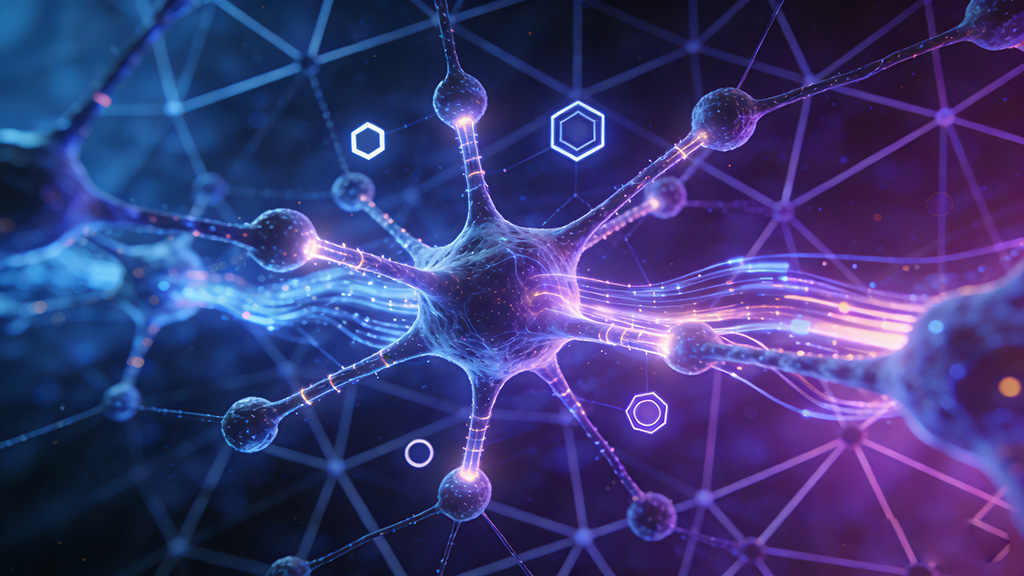
A neural network is a computational model inspired by the way biological neural networks in the human brain work. It consists of layers of interconnected nodes (neurons) that process data. Each connection has a weight that adjusts as learning proceeds.
Key Components
- Neurons: The basic units of a neural network.
- Layers: Typically include input, hidden, and output layers.
- Weights and Biases: These are adjusted during training to minimize error and improve accuracy.
How Neural Networks Work
Neural networks learn through a process called training, which involves the following steps:
- Forward Pass: Input data is fed through the network, and outputs are generated.
- Loss Calculation: The difference between the predicted output and the actual output (target) is calculated using a loss function.
- Backpropagation: This technique helps adjust weights by calculating the gradient of the loss function. The weights are updated using optimization algorithms like Stochastic Gradient Descent (SGD).
Types of Neural Networks
Neural networks come in various types, each suited for different tasks.
1. Feedforward Neural Networks
The simplest type where connections do not cycle back. Typically used for straightforward classification tasks.
2. Convolutional Neural Networks (CNNs)
Primarily used in image processing. CNNs utilize convolutional layers to automatically detect patterns.
3. Recurrent Neural Networks (RNNs)
Designed for sequential data, such as time series or natural language. RNNs can effectively consider past information due to loops in their architecture.
Applications of Neural Networks
Neural networks are versatile and can be applied in various domains:
- Image Recognition: Used in applications like facial recognition and medical imaging.
- Natural Language Processing: Powering chatbots and translation services.
- Autonomous Vehicles: Assisting in perception for self-driving cars.
- Finance: Predictive modeling for stock prices and fraud detection.
Challenges and Considerations
While neural networks have revolutionized many fields, they are not without challenges:
- Overfitting: When a model learns the training data too well, it may perform poorly on unseen data.
- Computational Cost: Training deep networks can be resource-intensive.
- Interpretability: Neural networks often function as “black boxes,” making it difficult to understand their decision-making processes.
Conclusion
Neural networks are indeed the backbone of modern machine learning, driving advancements across numerous industries. As technology continues to evolve, understanding these complex models will be crucial for developing more intelligent systems. From pushing the boundaries of AI to navigating ethical considerations, the journey of neural networks is only just beginning.






Leave a Reply